Event Host FAQ & Guide
Everything you need to know about hosting an event during Hawaii Tech Week
Please read through the guide below — it's the fastest way to understand what makes a great HTW event. For your convenience, you can also use the Copy Page button near the top to open this guide in ChatGPT or Claude (or copy it as Markdown) and ask questions as you go.

Introduction
Hawaii Tech Week (formerly Honolulu Tech Week) is a distributed "unconference" where events are independently organized by leaders in Hawaii's tech ecosystem and beyond. Events range from panels and mixers to product launches, dinners, and experiential events across Honolulu.
Why Host an Event?
Hosting an event at HTW is one of the most impactful ways to grow your audience, brand, and business while contributing to Hawaii's tech community and economy. The most common reasons companies and leaders host:
- Build Relationships: Bring together your team, customers, partners, and investors while meeting new ones.
- Recruit & Educate: Meet, recruit, and retain key tech talent, users, stakeholders, and more.
- Drive Awareness: Promote your brand, product, service, new initiatives, and announcements to a tech-forward audience.
- Establish Thought Leadership: Position your company or yourself as a leader in your space through curated content, speakers, and experiences.
- Give Back: Contribute to Hawaii's tech ecosystem and help accelerate talent, capital, and adoption in the islands.
What You Get
As an approved Event Host, HTW provides:
- Official Calendar Placement: Your event is placed on the HTW calendar, which receives 10,000+ views annually and is shared across our channels and audience.
- Co-Marketing & Social Promotion: We repost and amplify your event across our social channels (LinkedIn, Instagram, YouTube, X). The more you tag and market, the more we share.
- Community Distribution: Your event reaches HTW's network of tech professionals, founders, investors, and community leaders across Hawaii and globally.
- Planning Resources: Use the Event Planning Template, Venue Directory, and Event Marketing Templates to plan and promote your event.
- HTW Branding: Access to the official HTW logo and branding to use in your event materials, establishing credibility and connection to the larger week.
What We Look For
Event Hosts lead their own events and are responsible for the full planning, marketing, execution, and costs of their events. HTW is not a conference — we don't provide venues, budgets, or staffing for individual events. What we provide is visibility, community, and guidance.
The hosts and events that tend to be most successful:
- Leaders with an established or rapidly growing business, organization, or audience.
- Events themed around connecting, educating, or inspiring a targeted audience.
- Great speakers, pressing topics, and unique experiences that raise the bar.
- Deep subject matter, impactful announcements, or the launch of new initiatives.
- Hosts who actively market their events and engage their existing networks.
To assess your event idea, compare it with the Event Submission Rubric and Popular Event Types, then use the Event Planning Template to work through the details.
Event Host FAQ
Are there speaking opportunities for me or my company?
We do not have a general speaker program like a conference — the best way to promote your speakers is by hosting or co-hosting your own event!
How big of an event should I host?
Events range from 10 to 500+ attendees, and all sizes have generated an average 4.7/5 rating. Quality is what counts.
Should I host or co-host an event?
Either works. Solo hosting is more streamlined, but co-hosting helps split costs and the work. See Co-Hosts for more.
As an event host, what am I responsible for and what is HTW responsible for?
You are responsible for your event idea, planning, costs, marketing, operation, and compliance — including safety, insurance, and any permits your event needs. HTW provides calendar placement, co-marketing, guidance, and branding. See What You Get and Host Responsibilities & Compliance for details.
What is the role of HTW sponsors versus event hosts?
Running HTW requires significant investment. Our sponsors help fund shared programming — keynotes, videography, marketing — that benefit all attendees and hosts. In turn, they receive special branding, event promotion, and other perks.
Can my company participate or host an event if we're not based in Hawaii?
Yes! We welcome global leaders, but emphasize a connection to Hawaii — employees or customers here, returning kamaʻāina, investors, or other strong ties.
Is there any cost to host an event at HTW?
There is no fee to host an event during HTW. Event hosts are responsible for their own event costs (venue, F&B, etc.), but HTW does not charge for calendar placement, co-marketing, or branding. The only fee is a $150 late fee for events submitted after the submission deadline (July 31, 2026).
Getting Started
🗓️ Hawaii Tech Week 2026 will take place from August 31 - September 6, 2026. Add it to your calendar: Google | Apple | Outlook
2026 Event Submissions Closed: The submission deadline passed on July 31, 2026. Get updates about future editions. The guides below remain available for planning.
- Read this guide to understand what hosting involves and what we look for.
- Use the Event Planning Template to draft your event plan.
- Review the Event Submission & Calendar guide to understand the submission and calendar process. Public submissions for 2026 are closed.
- Use the Event Marketing Templates for marketing checklists and copy templates.
We hold monthly virtual office hours for event hosts — check the HTW Calendar for upcoming sessions.
For future editions, get updates.
Popular Event Types
These types of events have done well at HTW or other tech weeks. While not a requirement for your event to fit into one of these, these tend to perform well.
- Panels and fireside chats with local and global industry leaders, VIPs, and KOLs.
- Product launches and major announcements, e.g., fundraising, partnerships, key hires, etc.
- Masterclasses in functional areas such as GTM, fundraising, building AI agents — ideally led by those with a proven track record at a global level.
- Industry mixers, both large cross-industry and intimate targeted gatherings.
- Events hosted by major Hawaiʻi industries such as real estate, agriculture, education, travel & tourism, and construction.
- Product and technical demos that people can play with or experience — drones, VR, AI tools, 3D printing.
- Morning and high-energy events like coffee mixers, coworking collabs, and pop-ups.
- Health & happiness events and activities such as city walks, catamaran cruises, workouts, and nature activities.
- Creator-led events such as live podcasts, content shoots, trainings, and media features.
- Events at company offices, unique venues, or places special to Honolulu / Hawaiʻi.
- Events brought by companies or leaders visiting from neighbor islands or globally — especially those with ties to Hawaiʻi.
- Volunteer events such as beach cleanups, heiau work, and community service.
- Private dinners and meals with target audiences, such as investor and LP dinners.
Event Submission Rubric
We review events based on the following criteria. These aren't strict requirements — just general guidelines we consider when reviewing submissions.
- Does the event have a compelling title, description, purpose, and theme?
- Does the event have a targeted audience and a unique, exciting, or educational component?
- Is the event in alignment with the HTW mission of accelerating tech talent, capital, or adoption?
- Does the host have a track record of success, established brand, and / or audience reach?
- Does the host have a clear goal or incentive for putting on the event?
- Does the host have budget allocated or fiscal backing for the event?
- Did they previously host an HTW event? If yes, were they easy to work with, was the event well received, and did they conduct sufficient marketing?
Draft Your Event Plan
We've created an Event Planning Template that you can copy or feed into an LLM to help draft your event plan. Use it alongside this guide.
Set a Compelling Title, Theme, and Goal
Start with what you want to achieve and who you want to reach. Some hosts aim to launch a product to 100 users, others want to bring together their community or build thought leadership. Your goal will shape everything else — format, speakers, venue, and marketing.
Your event title is the first thing people see on the calendar. Make it specific, audience-targeted, and compelling. Titles that clearly signal the topic and value tend to outperform generic ones — compare "Recruiting & Retaining Hawaii's Top Tech Talent" vs "HR Panel Discussion". Pair the title with a focused theme that ties your content together.
Choose an Event Format
Many event formats are possible, but unique events that educate, inspire, and/or connect attendees perform best. When you submit your event, you'll select one of these formats:
- Panel / Talk: Moderated discussions, fireside chats, keynotes, and presentations. This format is popular because it is educational and brings together the panelists' audiences. E.g. "Recruiting & Retaining Hawaii's Top Tech Talent".
- Mixer / Networking: Happy hours, pau hanas, coffee meetups, and casual networking events. These are great for creating new connections and strengthening existing ones. E.g. "Hawaii Founders Coffee".
- Workshop / Masterclass: Hands-on, educational sessions where attendees learn by doing. These work well for technical topics, skill building, and deep dives. E.g. "Brand in a Box: Build Your Investor-Ready Identity in 3 Hours".
- Dinner / Private Gathering: Curated meals, private dinners, lunches, and breakfasts. These are often invite-only so hosts can curate the limited seating, but still build brand awareness on the calendar. E.g. "Marketers in Tech Dinner".
- Demo Day / Pitch: Startup demos, pitch competitions, and showcase presentations where multiple companies present to an audience. E.g. "Beta Brews".
- Hackathon / Build: Multi-hour or multi-day build events and competitions where participants create something. E.g. "Vibe Coding Hackathon & Drone Showcase".
- Launch / Experience: Product launches, branded experiences, and interactive showcases — one company's moment to shine. E.g. "HPU Esports Open House".
- Activity / Wellness: Fitness, tours, volunteer events, outdoor activities, and creative experiences. E.g. "Volunteer Day with the Hawaii Land Trust".
- Summit / Conference: Multi-session, multi-track, or full-day+ programming with multiple speakers and tracks. E.g. "TRUE Hawaii: Hawaiʻi AI & Cloud Innovation Summit".
You'll also select a registration type: Open (anyone can register), Approval Required (you review and approve each registrant), or Invite Only (only people you invite can attend). Most events are Open, but dinners and curated gatherings often use Approval Required or Invite Only.
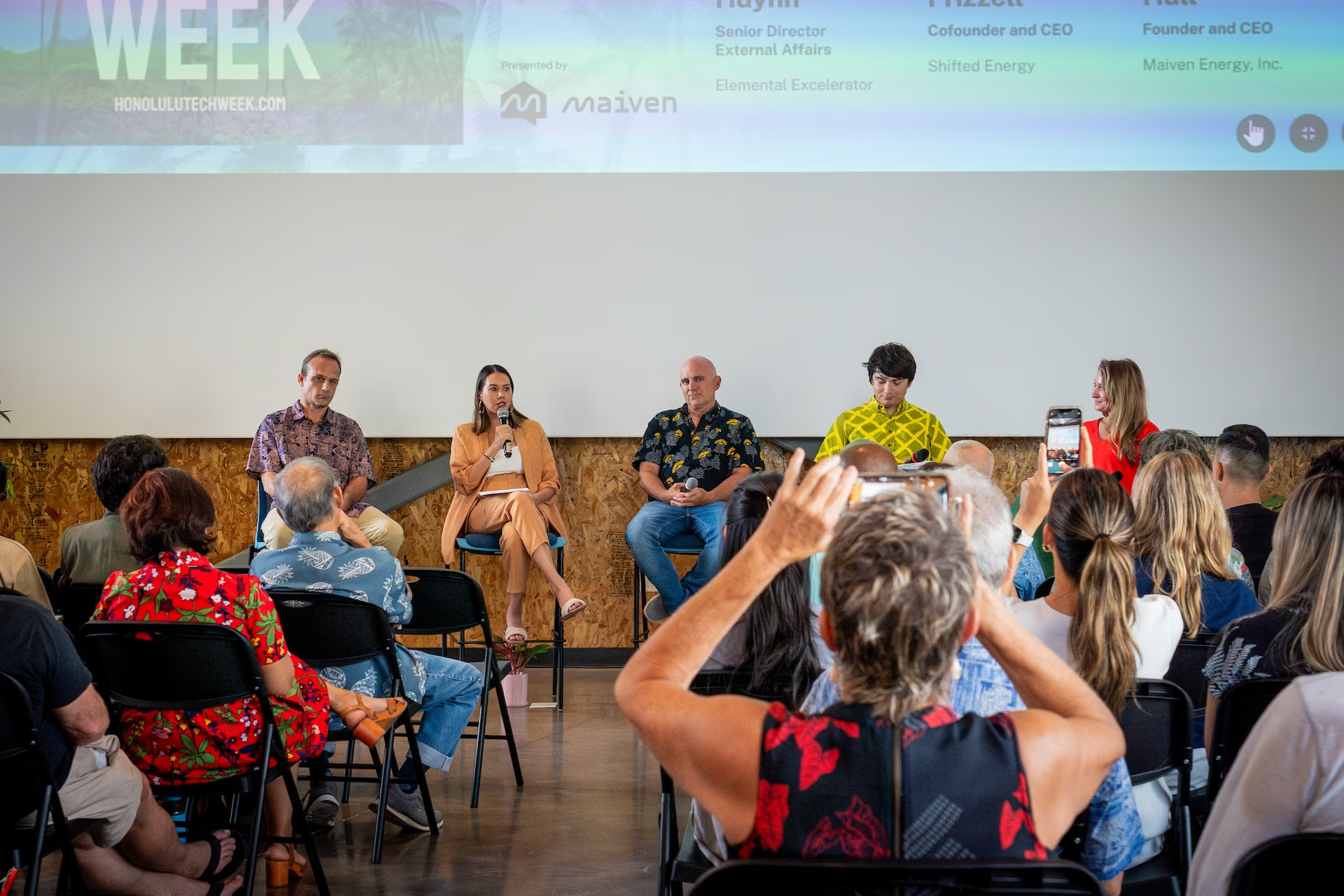
Have a Strong Hook
Here are a few tips to maximize the impact of your event:
- Targeted Audience: Be specific — an industry segment, technology type, role, or community. Targeted events get more sign-ups, better audience quality, and lower attrition.
- Compelling Content: Announcements, product launches, demo days, masterclasses, and unique experiences give people a reason to show up. The more specific and timely the content, the stronger the draw.
- Great Speakers: Luminary speakers and industry experts drive attendance — see the Speakers section below for more.
Speakers
Find the most compelling speakers you can. Luminary CEOs, founders, executives, and public figures with great stories and insights drive attendance and elevate quality. We recommend you bring in customers, partners, or industry leaders and make them the rockstar — have them help tell the story of your company and tech.
Speakers are not mandatory and depend on event format, but attendees love the opportunity to learn and hear from experts. Even if hosting a mixer, having a known leader or VIP join or say some words to kick off the event makes for great marketing and will drive attendance.
Co-Hosts
Co-hosting can be a powerful way to split costs, expand your audience, and share the workload. We recommend considering a co-host if you need additional support with budget, venue, or event promotion. Common co-hosting arrangements include an investor hosting a panel with a portfolio company, a company doing an event with a customer, or two organizations in the same industry joining forces.
On the submission form, you can add up to 3 co-hosts — their company or organization name will appear alongside the primary host on the calendar listing. We typically recommend having a pod of ~3 people across your hosting team: an event lead, operations support, and marketing support.
Individual Event Sponsors
If your event has costs you'd like help covering, consider bringing on an individual event sponsor. These are companies or organizations that contribute budget to your specific event in exchange for branding, speaking slots, or other benefits you define. Securing individual event sponsors is the responsibility of the event host — this is a direct arrangement between you and the sponsoring company.
Individual event sponsors are separate from HTW's official sponsors and partners. Their logos and branding will not appear on the HTW website sponsor sections — those are reserved for companies that sponsor Hawaii Tech Week itself. However, you are free to feature your individual event sponsors on your own event listing (e.g. Luma page), event graphics, and marketing materials.
Examples include a company sponsoring food & beverage in exchange for logo placement and a 2-minute intro, or a partner covering venue costs in exchange for co-branding on the event listing. If you go this route, be clear with sponsors upfront on what they receive and what's expected.
Secure a Venue
You are welcome to host anywhere in Honolulu, but we recommend hosting in the core neighborhoods that create density — events in these areas tend to have higher sign-ups and attendance with lower attrition.
- Honolulu (strongly recommended): We have a special emphasis on the downtown Honolulu area including the Business District, Kakaʻako, Ala Moana, extending out to Waikīkī, Mānoa, Chinatown, and surrounding areas. Concentrating events in Honolulu makes it easy for attendees to move between events and builds ecosystem density.
- Greater Oʻahu: Events in areas like Kailua, North Shore, or Hawaiʻi Kai are welcome but may see lower attendance due to travel time. We generally recommend Honolulu unless your venue or audience makes another location compelling.
Depending on the event type, hosting at your offices, workspace, or venue you have a relationship with can be really compelling for attendees. We recommend this when possible as it gives you an opportunity to show off your company and reduces the need for procuring a venue.
If you need a venue, check our Venue Directory for recommended spaces across Honolulu.
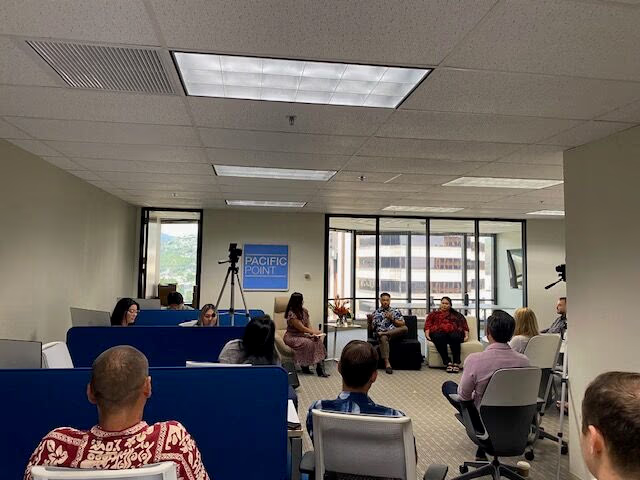
Propose a Day and Time
As you think about days and times, check the HTW Calendar to see the list of events that have already been approved. While it's very common for multiple events to overlap, our team may suggest changes if too many events of the same audience and theme compete for the same time.
Events typically last 1-3 hours. Morning and daytime events often have less competition — late afternoon and evening slots are popular but there will be multiple other events going on during the time. The average attendee went to 3 events in 2025, so great speakers, content, and marketing are what drive attendance more than time slot.
Plan for attendance rates. Free events typically see 20-30% attrition of attendees, depending on the event hosts marketing to registrants. Set your capacity higher than your target headcount and use Luma's waitlist feature to backfill cancellations.

Create a Budget
As the event host, you are responsible for all event costs — venue, food and beverage, and other expenses. Events don't need to be costly, and if you want to split costs, consider a co-host. Most companies fund events through marketing, events, or PR budgets.
- Should I do a free event or charge attendees? Most companies do free events as they drive more sign-ups, but it is your choice and value dependent. Events with a cost, even minimal (e.g., $10), can be helpful in anchoring attendees but will lower sign-up. On the submission form, you'll select Free, Paid, or Free + Paid.
- Should I provide food & beverage (F&B)? This is largely dependent on event type, time, and at the discretion of the host. F&B should not be the primary focus of the event, but having F&B can be a nice benefit for attendees and keep them at events longer.
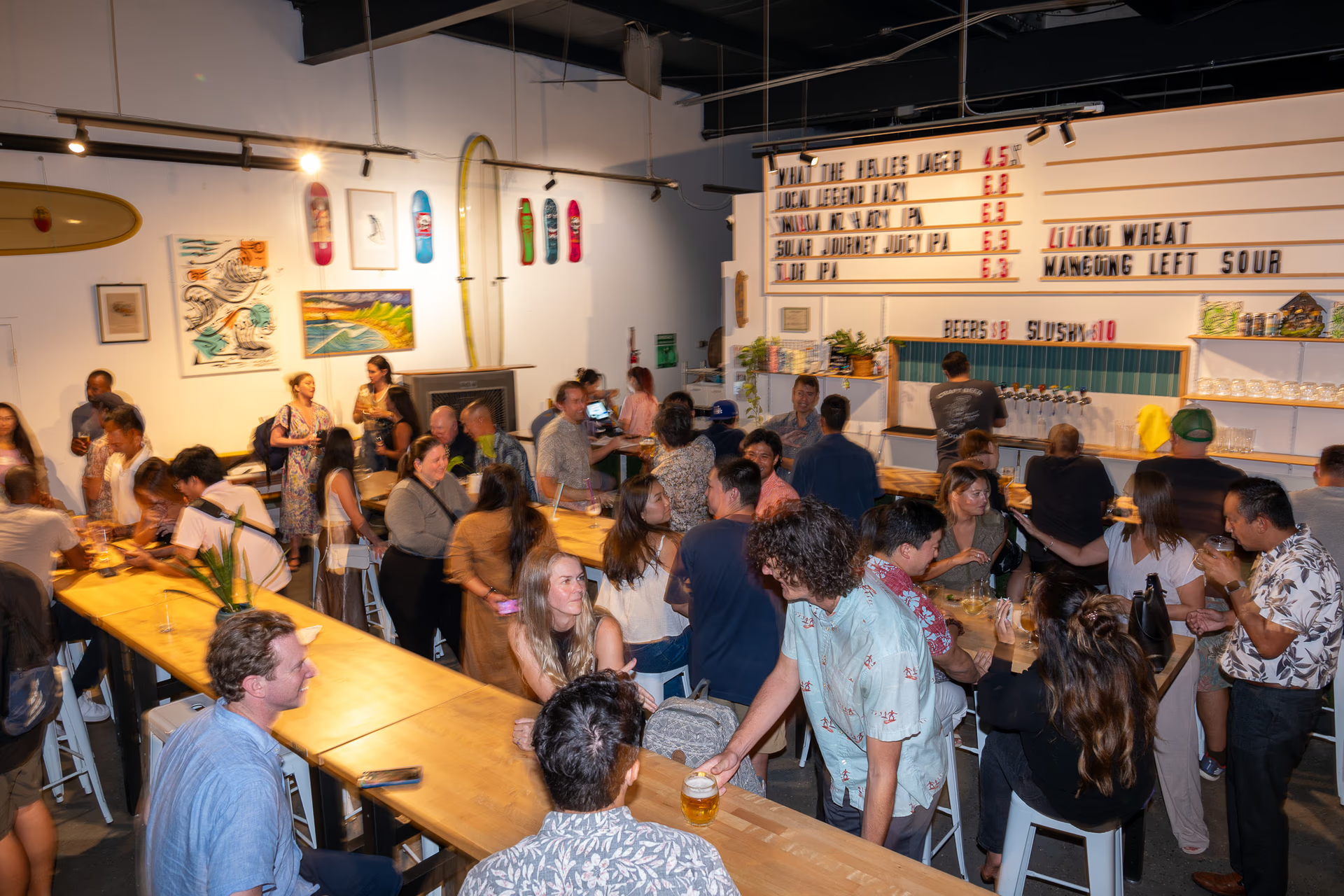
Once you have your initial event idea and plan drafted, review the Event Submission & Calendar guide for the information you'll need and how calendar placement works.
2026 submissions closed on July 31. Get updates about future editions.
Event Promotion
Promoting your event is critical to its success. While HTW helps co-market (see What You Get), marketing is the responsibility of the event host. Use the Event Marketing Templates for ready-to-use checklists, copy templates, and LLM prompts.
Your Marketing Channels
Plan your own marketing across email, social media, word of mouth / direct outreach, and your website. Think creatively — short-form video like reels and personal outreach consistently outperform generic posts.
Video Content: Shoot a Reel
Short-form video is one of the highest-performing formats for event promotion. A quick reel from your phone talking about your event, why you're excited, and who should attend can drive significant registrations. Here's an example of Iolani educator and content creator Gabriel Yanagihara promoting his event at Iolani School.
See the Event Marketing Templates for LLM prompts to generate video scripts and social copy.
Social Media Channels
Follow and tag us so we can repost your promotion:
- LinkedIn: Hawaii Tech Week (/hitechweek) — our primary channel. Tag your speakers and partners on posts.
- Instagram: @hitechweek — tag us in posts and add us as a collaborator to appear in our main feed. Post to your feed and share to your story.
- YouTube: Hawaii Tech Week (@hitechweek) — subscribe and tag us on video content.
- X (Twitter): @hawaiitechweek — tag us for reposts.
Publish your reels, interviews, and recaps on your own channels and tag the accounts above so we can find your content.
We aim to repost each event's promotion 1-2 times leading into HTW, but balance across 50+ events — higher quality content and consistent tagging make it easier for us to share. Use the Event Marketing Templates to build your own promotion schedule.
Build Momentum
Start promoting early with save-the-dates and speaker announcements. Once the calendar is live, drive registration and keep registrants engaged with updates (new speakers, special announcements). Luma automatically sends 1-day and 1-hour event reminders, but your own outreach will decrease attrition and increase excitement.
Event Production
The day of your event is when all your planning comes together. Across 100+ events, the ones that are most successful are high energy, engaging, and focused.
Setup & Logistics
- Arrive at least 1 hour early. Test AV equipment, set up signage, and prepare your check-in area (Luma QR codes, sign-in sheets, etc.).
- Consider providing name tags to facilitate networking.
During the Event
- Start on time with a brief welcome — thank attendees, introduce speakers, and mention HTW.
- Encourage participation, questions, and networking. Have someone designated for logistics and issues.
- Capture key moments, speaker quotes, and candid networking shots throughout the event.
Wrapping Up
- Thank attendees, speakers, and sponsors. Mention follow-up actions or resources.
- Collect feedback via Luma's automated feedback tool.
- Give attendees time to exchange contact info and continue conversations. Leave the venue in good condition.
Capture & Share Content
Content extends your event's impact beyond the room.
- Capture photos and video throughout and post to social media during the event — tag our social accounts so we can repost.
- Ask attendees to post and tag both your accounts and Hawaii Tech Week.
- Post a recap afterward — use the Event Marketing Templates for post-event copy.
- Plan photography or videography in your event budget and assign someone to capture content. Use the Event Planning Template to keep production details with the rest of your plan.
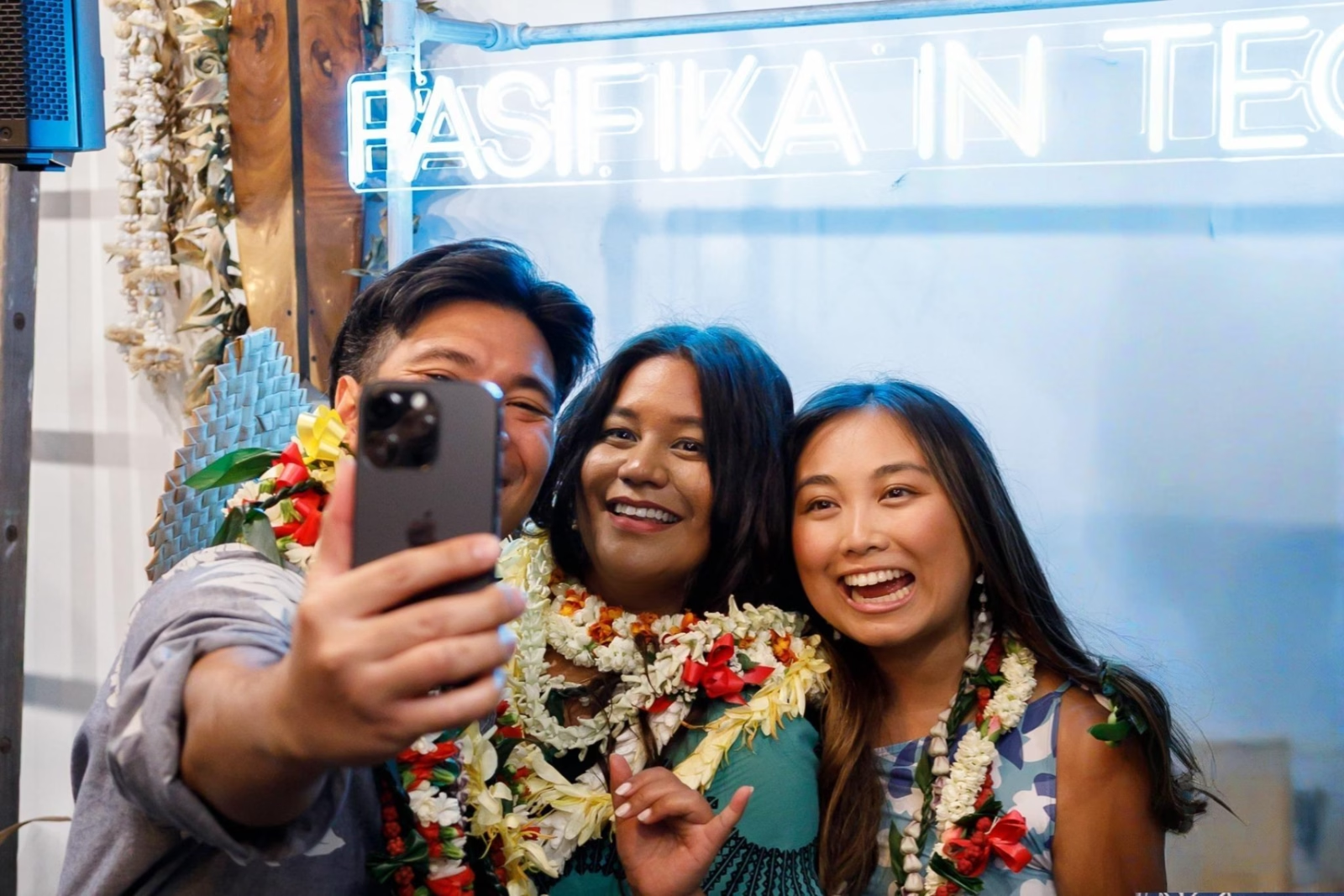
Host Responsibilities & Compliance
Hawaii Tech Week events are created and run by independent Event Hosts — your event is yours end to end. That ownership covers:
- Operation & staffing: running your event, including setup, check-in, supervision, and teardown.
- Participant safety: venue capacity, accessibility, emergency procedures, and reasonable supervision of attendees.
- Legal compliance: all laws and regulations that apply to your event, including venue permits, food & beverage rules, and liquor licensing if you serve alcohol.
- Insurance: any insurance appropriate for your event. Many venues require hosts to carry event or general liability insurance — confirm requirements with your venue.
- Liability: you assume all risks and liability arising from your event, as agreed in the event submission terms.
Participants under 18
If your event includes participants under 18 — for example, students on a high school panel or attending a hackathon — you are responsible for: (i) complying with all applicable laws relating to minors, (ii) obtaining written parent or guardian consent as part of registration, (iii) providing appropriate supervision and accounting for minors in your safety plan and insurance, and (iv) obtaining any consent required by law before publishing content featuring them.
Plan for a Future Edition
Event submissions for 2026 closed on July 31. Use the Event Planning Template to develop your idea and get updates about future editions.